Samsung Neo QLED 4K QN80F Vision AI Smart TV: Is It Worth the Upgrade?
Everything the QN80F changes about mid-range picture quality

Picture quality on mid-range TVs used to mean picking your battles. Bright rooms killed contrast. Dark rooms washed out colors. You learned to live with whatever compromise annoyed you least. The Samsung Neo QLED 4K QN80F Vision AI Smart TV is Samsung’s answer to that trade-off for 2025. It leans on Mini LED backlighting and an AI processor that does more than the usual marketing checkbox suggests. If you research every big purchase down to the stitching, the same instinct that sends people digging through a detailed breakdown of performance fabric before buying gear, this TV rewards that extra reading.
What sets the Neo QLED 4K QN80F apart from a standard QLED
Regular QLED TVs use edge-lit or basic direct LED backlighting. That means fewer dimming zones and more light bleed around bright objects on dark backgrounds. The QN80F swaps that setup for Samsung’s Quantum Matrix Technology, which packs in far smaller Mini LEDs. Samsung groups those LEDs into tighter clusters and controls them individually. A lamp in a dark scene stays contained. It doesn’t glow into the shadows around it the way older backlighting does.
The panel runs native 4K, 3,840 by 2,160 pixels. Most sizes hit a 100Hz refresh rate, and 144Hz kicks in for PC gaming setups with a compatible graphics card. Sizes span from 55 inches up to a genuinely massive 100-inch model. That range covers everything from a bedroom upgrade to a full home theater centerpiece, and Samsung keeps the underlying tech the same across the lineup.
Vision AI and the NQ4 processor doing the heavy lifting
Here’s where the “Vision AI” part of the name earns its keep. Samsung built the TV around its NQ4 AI Gen2 processor. That chip runs 20 separate neural networks to upscale lower-resolution content to 4K in real time. I test enough AI upscaling to stay skeptical of the term by default. But the difference shows up on older cable broadcasts and compressed streaming content. Edges that would normally look soft get noticeably cleaner.
Vision AI does more than upscale, though. It reads the scene as it plays. It adjusts color and contrast depending on whether you’re watching a dim thriller or a sun-drenched sports broadcast. It also tracks viewing habits over time. From there, it personalizes recommendations and picture settings per user profile. That matters most in households where three people share one TV and hold three different opinions about “good enough” contrast.
Sound that tries to keep up with the picture
A sharp picture on a TV with tinny speakers is its own kind of letdown. Samsung clearly built the QN80F with that problem in mind. It supports Dolby Atmos with virtual top-channel processing, so sound feels like it comes from above and around you instead of strictly left to right. Q-Symphony support rounds things out for anyone pairing the TV with a compatible Samsung soundbar. The TV’s own speakers keep working alongside the soundbar instead of shutting off entirely.
This won’t replace a dedicated home theater setup. But for a TV in this tier, the audio holds its own well enough that a lot of buyers could skip the soundbar purchase, at least for a while.
Gaming features worth knowing about
Samsung doesn’t market the QN80F as a gaming-first TV, but the feature list says otherwise. AI Auto Game Mode detects supported console and PC titles and adjusts settings automatically. Super Ultrawide GameView handles 21:9 and 32:9 aspect ratios for PC games that support them. The Game Bar overlay shows refresh rate, VRR status, and input lag readouts without forcing you to dig through menus mid-match.
None of this turns the QN80F into a dedicated gaming monitor. If competitive response time is your top priority, look elsewhere. But for casual gaming on the same screen you watch shows on, these extras earn their spot instead of sitting there unused.
Smart TV platform and everyday usability
Samsung’s Tizen-based smart TV platform runs the show here. It comes bundled with Samsung TV Plus, which unlocks over 2,700 free channels, more than 400 of them premium, on top of the usual streaming app library. The interface stays reasonably fast even with several apps open. I can’t say that about every mid-range smart TV I’ve used.
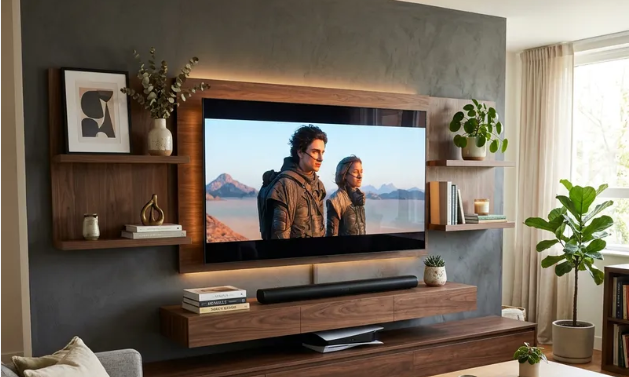
The AirSlim design keeps the bezels thin and the profile shallow. That makes it sit flush against a wall mount, which matters if you want a clean, low-profile look instead of a boxy centerpiece.
Who should actually buy this TV
Say you’re upgrading from an older LED or basic QLED set. Say you split your time between streaming, live sports, and the occasional gaming session. In that case, the Samsung Neo QLED 4K QN80F Vision AI Smart TV lands in a genuinely useful spot. It isn’t the flagship of Samsung’s Neo QLED range, so buyers chasing the absolute best local dimming and peak brightness should look at the pricier models above it. But for most households, the jump from a standard QLED to this one feels bigger than the price difference suggests. Credit the Mini LED backlighting for that. It handles contrast in everyday content far more cleanly than older setups manage.
If your current TV still looks fine and you’re not fighting glare or muddy blacks, skip the upgrade for now. But if your picture quality has quietly annoyed you for a year and you just haven’t gotten around to fixing it, the QN80F is a reasonable place to stop looking.