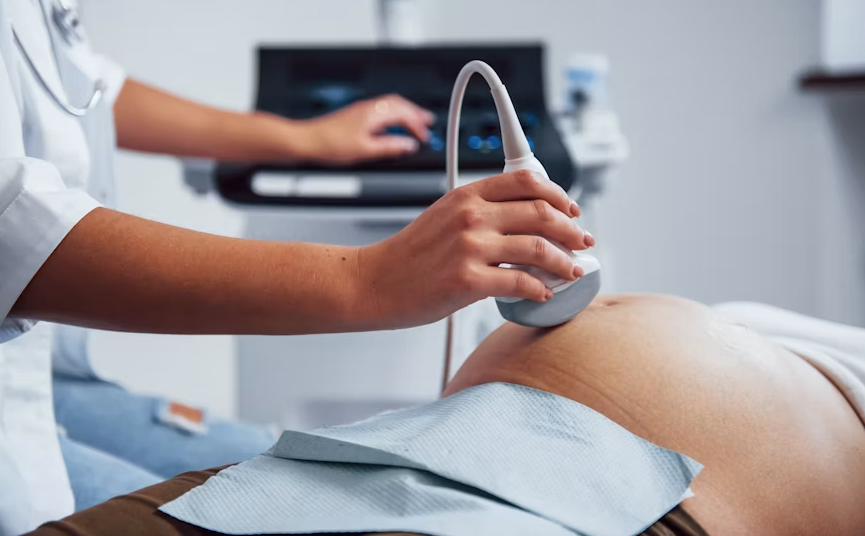
The future of ultrasound tech in the era of AI
How AI is turning handheld scanners into diagnostic tools anyone can use

A radiologist in a small clinic can now scan a pregnant patient with a handheld probe connected to a phone, and an algorithm flags within seconds whether the baby’s position needs attention. That’s where ultrasound tech stands right now, not some far-off promise. It’s part of the same wave that’s letting people get paid to code with AI instead of spending years climbing a traditional software career ladder. AI is quietly rewriting a lot of fields at once, and medical imaging is one of the more interesting ones to watch closely.
I’ll admit, when I first read about AI-guided ultrasound, I pictured some clunky add-on feature nobody would bother using. I was wrong. The tech moved fast, and it’s changing who can perform a scan, not just how well the scan turns out.
Why ultrasound needed help in the first place
Ultrasound has always had an odd problem. The machine itself is cheap and safe compared to a CT scanner or an MRI. No radiation, no huge magnet, no dye injections. But getting a useful image out of it depends almost entirely on the skill of the person holding the probe. Angle it two degrees off and you miss the exact thing you were looking for. That’s why hospitals spend years training sonographers, and why so many clinics in smaller towns simply don’t have anyone confident enough to run the machine.
The bottleneck was never really the hardware. It was human skill, and skilled people are hard to scale on short notice.
What AI actually changes here
This is where things get useful instead of just flashy. AI models trained on large sets of scans can recognize organ boundaries, flag abnormal tissue, and guide a novice operator toward the correct probe angle in real time. Caption Health’s Caption Guidance software got FDA clearance in February 2020 through the De Novo pathway, built to walk healthcare workers who aren’t cardiac ultrasound specialists through a heart scan step by step.
A JAMA Cardiology study on the software is the detail I keep coming back to. Nurses with no prior ultrasound experience captured images good enough to assess left ventricular size and function in 98.8% of patients, right ventricular size and function in 92.5%, and pericardial effusion in 98.8%. Their scans agreed with an experienced sonographer’s readings at least 92.5% of the time. That’s not a small improvement in convenience. It’s a different category of who gets to run a cardiac scan at all.
Diagnosis speed is improving too. Instead of a technician manually measuring a fetal head circumference or a liver’s size, software can do rough measurements in the background while the scan is happening, and some systems flag likely abnormalities before a doctor finishes reviewing the images. None of this replaces a doctor’s judgment. It just shrinks the gap between “scan complete” and “here’s what we think is going on.”
Portable ultrasound tech is where this gets exciting
Handheld ultrasound used to be a trade-show novelty, something you’d see once and forget about. Now companies are shipping devices that plug into a smartphone and cost less than a decent laptop. Pair that with AI interpretation and you get something genuinely useful: a paramedic checking for internal bleeding before the patient even reaches a hospital.
Clinics in parts of Africa and South Asia have been piloting handheld setups for prenatal checkups, mostly because a full radiology department was never going to reach those towns anyway. Whether this scales more broadly depends heavily on regulation, and every country handles medical AI approval differently. Some regulators will move quickly. Others will drag their feet for reasons that are, honestly, pretty defensible, mostly around liability and patient data.
The part nobody likes to talk about
Not everything about this shift feels comfortable. If AI can guide a nurse through a cardiac scan, what happens to the ultrasound tech whose entire career was built on that exact skill? I don’t think the job vanishes. It probably changes shape, less about manual dexterity, more about interpreting the edge cases the AI flags as uncertain.
There’s also a trust problem nobody has fully worked out. A missed diagnosis from a human carries a familiar kind of accountability. A missed diagnosis from an algorithm raises messier questions about who’s actually responsible, the hospital, the software vendor, or the doctor who signed off on the result. I suspect the answer ends up different in every country, shaped by whichever lawsuit sets the precedent first.
Accuracy also still depends heavily on training data. A model trained mostly on scans from one hospital system might behave oddly on anatomy typical of a different population somewhere else. That’s not a minor footnote. It’s the kind of gap that decides whether this technology helps the people who need it most, or mostly just the ones already well served.
Where this is headed
Give it five years and handheld AI ultrasound tech probably becomes standard kit for paramedics, midwives, and rural doctors, the same way pulse oximeters became unremarkable after a couple of decades. The real fights ahead won’t be about whether the technology works. They’ll be about who gets trained on it, who pays for it, and whether insurance systems and health ministries move fast enough to keep up with what the hardware can already do.
If you work anywhere near healthcare, medtech, or AI applications generally, this is worth watching. Ultrasound is turning into one of the clearer examples of AI making a real difference in ordinary people’s lives, not just automating a spreadsheet somewhere.

One Comment